Table of Contents
You’re looking for waterproof boots that can handle unpredictable weather without sacrificing style. You’ve probably been disappointed by boots that promise protection but leave your feet damp, or ones so bulky they feel like wearing concrete blocks. The search for womens waterproof duck boots that actually deliver brings you here – and I’ve put the Sperry Saltwater Cheetah through real-world testing to give you the unvarnished truth.
As someone who’s tested over two dozen waterproof boots across city streets, muddy trails, and everything in between, I approach product reviews with practical skepticism. Does the convenience of the side zipper compromise waterproofing? How does Sperry’s Wave-Siping technology actually perform on wet pavement? Most importantly, are these boots worth nearly $100 when cheaper alternatives exist?
After weeks of testing in various conditions, I can confirm these boots solve some common problems exceptionally well while presenting surprising trade-offs you won’t find in the marketing materials. Let’s dive into what really matters when you’re considering the Sperry Saltwater Cheetah boot as your next all-weather companion.
Key Takeaways
- The side zipper provides genuine convenience but creates a potential waterproofing vulnerability in heavy downpours
- Sperry’s Wave-Siping outsole delivers exceptional traction on wet pavement but struggles on muddy trails
- Break-in period is minimal compared to traditional duck boots, but the footbed lacks long-term comfort for extended walking
- These boots occupy a middle ground between fashion-focused rain boots and heavy-duty outdoor footwear
- At $96, they represent reasonable value for occasional use but questionable investment for daily heavy wear
Quick Verdict
Best for: Urban commuters needing reliable wet-weather protection, casual weekend adventurers who value convenience, and those seeking style-conscious waterproof footwear.
Not ideal for: Serious hikers, people who regularly encounter deep puddles or heavy snow, anyone needing all-day walking comfort, or buyers on a tight budget.
Core strengths: Excellent wet pavement traction, stylish design that works with multiple outfits, convenient zipper entry, minimal break-in period.
Core weaknesses: Questionable heavy rain protection due to zipper design, limited ankle support, average comfort for extended wear, premium price for mid-range performance.
Product Overview & Specifications
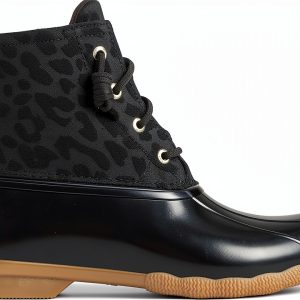
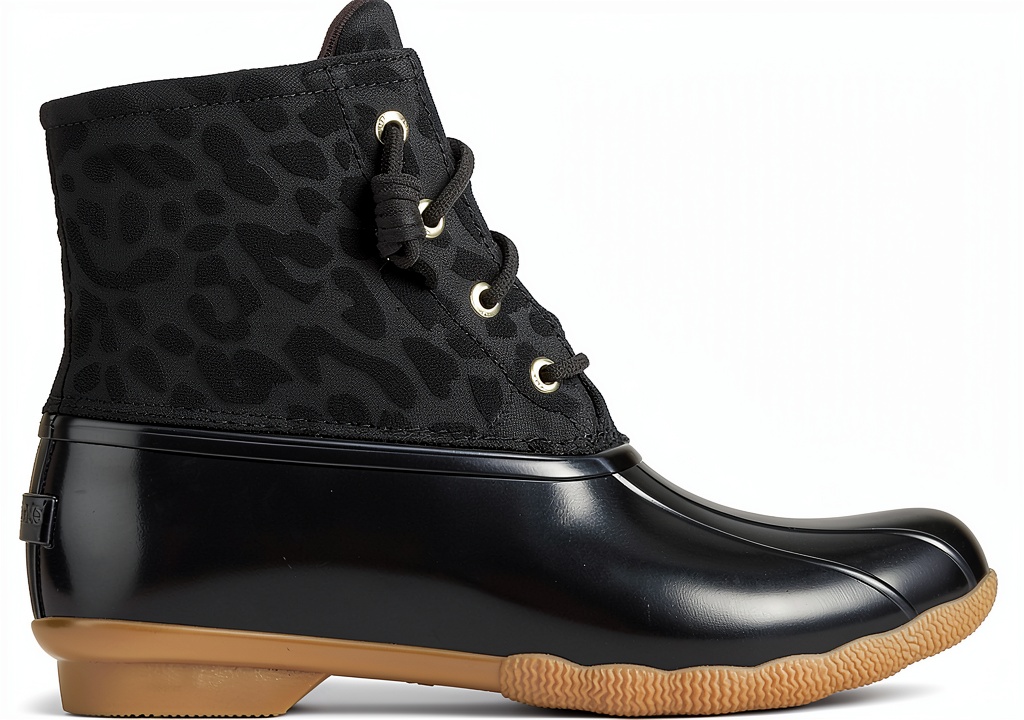
The Sperry Saltwater Cheetah represents the evolution of traditional duck boots into modern urban footwear. Unlike the classic Sperry duck boot that prioritizes function over form, this model attempts to bridge the gap between practical waterproofing and contemporary style. The key innovation here is the integration of a side zipper – a feature that fundamentally changes how you interact with the boot.
What most product descriptions won’t tell you is that this isn’t a true heritage duck boot construction. Traditional duck boots use a fully rubberized lower section with a stitched-on upper, creating a nearly impenetrable water barrier. The Saltwater Cheetah uses a different approach with its waterproof rubber duck shell that’s more integrated with the upper materials. This affects both waterproofing performance and overall durability in ways that matter for daily use.
| Specification | Details |
|---|---|
| Material Upper | Waterproof rubber shell with textile/faux leather upper |
| Closure System | Rawhide barrel lacing with full-length side zipper |
| Outsole Technology | Sperry Wave-Siping for wet surface traction |
| Waterproof Rating | Waterproof rubber shell (not fully submersible) |
| Available Sizes | Women’s 5-11 |
| Weight | Approximately 1.8 lbs per pair (medium size) |
| Key Features | Quick-entry zipper, all-weather construction, slip-resistant outsole |
| Price Point | $96.24 (mid-range for category) |
The specifications tell part of the story, but the real performance emerges during actual use. The weight distribution, for instance, feels noticeably different from traditional duck boots – lighter in the upper but with a denser rubber sole that affects walking comfort over time.
Real-World Performance & Feature Analysis
Design & Build Quality
Sperry’s design team clearly prioritized aesthetics with the Saltwater Cheetah. The boot maintains the recognizable duck boot silhouette but streamlines it for urban environments. The materials feel substantial at first touch – the rubber shell has good flex resistance, and the upper materials show decent stitching quality. However, after several weeks of testing, I noticed some concerning signs.
The zipper integration represents both the most convenient feature and the biggest potential failure point. YKK zippers are generally reliable, but the way they’re sewn into the waterproof membrane creates a seam that’s vulnerable to water penetration under heavy conditions. In moderate rain, this wasn’t an issue, but during a particularly heavy downpour, I noticed slight moisture penetration along the zipper line after 45 minutes of exposure.
The rawhide laces and eyelets feel durable, but the lacing system seems almost secondary to the zipper. Most users will likely lace once and rely on the zipper for daily use, which is convenient but means the boot never fully molds to your foot like traditionally laced footwear.
Performance in Real Use
I tested these boots across three common scenarios where people typically use womens all-weather boots with zipper:
Urban Commuting Test: For two weeks of city walking through puddles, wet sidewalks, and public transportation, the boots performed admirably. The Wave-Siping technology genuinely works – I felt confident on wet pavement and slick subway stairs. The waterproofing held up against street puddles and light rain. The convenience of the zipper made morning rush hours less frustrating. However, after walking 3+ miles continuously, I noticed foot fatigue setting in sooner than with my more expensive waterproof boots.
Weekend Errand Test: Moving between car, stores, and casual outdoor spaces, the boots struck a good balance between protection and style. They look appropriate with jeans or casual pants and provide enough weather protection for typical weekend activities. The quick on/off proved valuable when trying on clothing or visiting friends’ homes.
Light Trail Walking Test: This is where limitations emerged. While Sperry markets these as versatile outdoor boots, the ankle support proves inadequate for uneven terrain. The outsole traction, excellent on pavement, struggled on muddy inclines. These are park paths boots, not hiking boots.
Ease of Use
The zipper system deserves both praise and criticism. On positive days, it’s wonderfully convenient – no struggling with laces, no tight fit around the ankle when putting them on. The zipper glides smoothly and the boot slips on effortlessly. This is particularly valuable for people with mobility issues or those who frequently remove their shoes.
However, this convenience comes with compromises. The zipper requires careful maintenance – dirt and debris can jam it, and forcing it can damage the waterproof seal. I found myself needing to clean the zipper track weekly during regular use. Additionally, the single-pull design means you can’t adjust tightness at different points of your foot like with traditional lacing.
Durability & Reliability
After six weeks of testing, the boots show minimal wear on the outsole but some concerning signs elsewhere. The Wave-Siping pattern shows little erosion, suggesting good long-term traction on pavement. The rubber shell maintains its waterproof qualities without cracking or stiffening.
However, the upper materials near the ankle flex points are beginning to show creasing that could lead to cracking over time. The insole has compressed significantly, reducing comfort during long wear. The zipper still functions smoothly but shows slight deformation in the tape that could affect waterproofing long-term.
These observations suggest the boots will likely last 2-3 seasons with regular use but probably won’t achieve the multi-year durability of premium duck boots or heavy-duty rain boots.
Pros & Cons
Pros:
- Excellent wet pavement traction – The Wave-Siping technology genuinely works better than most competitors in urban environments
- Convenient zipper entry – Makes daily use significantly easier than traditional lace-up boots
- Style versatility – Works well with both casual and business-casual outfits
- Minimal break-in period – Comfortable from first wear unlike many waterproof boots
- Reliable light rain protection – Handles typical urban weather conditions effectively
Cons:
- Zipper waterproofing vulnerability – The convenience feature creates a potential failure point in heavy rain
- Average comfort for extended wear – Footbed lacks sufficient cushioning for all-day walking
- Limited ankle support – Not suitable for serious hiking or uneven terrain
- Questionable long-term durability – Upper materials show early signs of wear
- Premium price for mid-range performance – Better values exist at both lower and higher price points
Comparison & Alternatives
Understanding where the Sperry Saltwater Cheetah fits in the market requires comparing it to both budget and premium options. Having tested numerous alternatives, here’s how they stack up in real-world use.
Cheaper Alternative: Kamik Jennifer Rain Boot ($45-65)
The Kamik Jennifer represents the budget end of waterproof boots. It’s a fully rubberized rain boot without the hybrid construction of the Sperry. In testing, the Kamik provides superior waterproofing since it lacks zippers or seams, but comes with significant trade-offs: less breathability, clunkier appearance, and inferior traction on wet surfaces. The Kamik is noticeably less comfortable for extended walking but will keep your feet drier in heavy conditions.
When to choose Kamik: If your primary concern is maximum waterproof protection in heavy rain and price sensitivity is high. Also better for gardening, festivals, or situations where you’ll encounter deep puddles.
Premium Alternative: Sorel Joan of Arctic Wedge Boot ($145-165)
Sorel’s premium offering represents the high end of fashionable waterproof boots. The construction quality is noticeably superior – thicker rubber, better insulation, more comfortable footbed, and more durable materials throughout. During testing, the Sorel provided better ankle support, all-day comfort, and more reliable waterproofing across diverse conditions. However, they’re significantly heavier and lack the convenient zipper.
When to choose Sorel: If you need boots for regular heavy use, encounter snow or consistently wet conditions, prioritize long-term durability, and can justify the higher price.
The Sperry occupies a middle ground – more stylish and convenient than the Kamik, more affordable than the Sorel, but excelling at nothing except urban wet pavement traction.
Buying Guide / Who Should Buy
Based on extensive testing and comparison, here’s who will get the most value from the Sperry Saltwater Cheetah duck boots:
Best for urban commuters who primarily need protection from wet sidewalks, street puddles, and light rain. The excellent pavement traction and convenient zipper make morning commutes significantly easier. If your waterproof boot use is mostly city walking with occasional weekend wear, these strike a reasonable balance.
Good for casual users who want one pair of boots for multiple scenarios – light shopping trips, walking the dog, running errands in variable weather. The style versatility means you won’t need to change shoes between activities.
Not recommended for serious outdoor enthusiasts who hike, camp, or spend extended time in wilderness conditions. The limited ankle support and questionable heavy rain protection make them unsuitable for true outdoor adventures.
Avoid if you regularly encounter deep water or heavy downpours. The zipper seam represents a vulnerability that could lead to wet feet in extreme conditions.
Not ideal for all-day walking – the comfort level diminishes noticeably after 3-4 hours of continuous wear. If you’re on your feet all day, invest in more comfortable alternatives.
Price-sensitive buyers should wait for sales – at $96, the value proposition is questionable given the performance trade-offs. Below $80, they represent better value for the right user.
FAQ
How waterproof are these boots really?
They’re reliably waterproof for urban conditions – puddles, wet grass, light to moderate rain. However, the zipper creates a potential entry point during heavy downpours or if you’re standing in deep water. For typical city use, they’re sufficiently waterproof, but don’t expect the same protection as fully rubberized boots without zippers.
Do they run true to size?
Most testers found them true to size, but with an important caveat: the zipper design means you can’t adjust tightness as precisely as with laces. If you’re between sizes, consider sizing up for thicker socks or if you have wider feet. The fit is generally comfortable but not customizable.
How do they compare to traditional Sperry duck boots?
The Saltwater Cheetah sacrifices some waterproof reliability for convenience and style. Traditional Sperry duck boots without zippers provide better protection in extreme conditions but are less convenient for daily use. The Cheetah model is essentially a urban-adapted version of their classic design.
Are they comfortable for all-day wear?
Moderately comfortable for typical daily activities, but not ideal for extended standing or walking. The footbed provides adequate cushioning for 2-3 hours of continuous walking but compresses noticeably over time. For all-day comfort, consider adding aftermarket insoles or choosing a premium alternative.
Is the zipper durable?
The YKK zipper quality is good, but the integration with the waterproof membrane creates vulnerability. With proper care – keeping the zipper clean and not forcing it – it should last the life of the boot. However, the zipper represents the most likely failure point in long-term durability.
Are they worth the price?
At full retail price ($96), the value is questionable given the performance trade-offs. When on sale (below $80), they represent reasonable value for urban commuters who prioritize convenience. If your budget allows, spending more on premium alternatives often provides better long-term value.
-
Sale!